
SEO that connects the website, business and search demand
Start with the website’s current position, the business priorities and the searches that matter—then give each part of the work a defined purpose.
Technical clarity
SEO starts with the ability of search engines to access, interpret and index the right website pages.
Useful content
Pages should answer real questions, cover their subject properly and give readers a logical route to related information.
Entity connections
Clear relationships between the business, services, people, locations and supporting topics strengthen understanding across the website.
Measured progress
The SEO plan defines relevant checks and review points around the agreed work, current website and business priorities.
Start with evidence
Understand the website before prescribing activity

SEO work should begin with the website, its important pages, technical access, existing search visibility and the business subjects it needs to represent. The first priority is not automatically more content or more links.
- Review crawling, indexing and technical barriers
- Identify page ownership and competing or missing pages
- Compare existing visibility with business priorities
- Separate urgent fixes from longer-term development
Entity-led structure
Make the business and its services easier to understand
Clear relationships between Red Kite SEO, Pete Hogg, Sheffield, services and supporting subjects demonstrate the same principle applied to client sites. Important entities need dedicated page ownership, consistent facts and logical internal connections.
- State who the business is, what it provides and where it operates
- Give important services clear, dedicated pages
- Use supporting articles to build depth beneath each service hub
- Keep names, facts and relationships consistent across the wider web
Search is broader
Prepare useful information for people, search and AI-assisted discovery
Traditional search results, local results and AI-generated summaries can all influence discovery. The practical response is accurate business information, accessible pages, clear answers and content that demonstrates genuine subject knowledge—not a promise of inclusion or ranking.
- Answer important customer questions directly
- Support claims with reliable evidence and visible expertise
- Use structured data that matches visible page facts
- Maintain useful content as facts and search behaviour change
Measurement
Agree useful measures before judging progress
Rankings can provide context, but they are not the whole business outcome. Relevant checks depend on the work agreed, the starting point, the pages involved and the decisions the business needs to make next.
- Technical health and index coverage where relevant
- Visibility for agreed subjects and locations
- Qualified visits and actions on important pages
- Completed work, observed change and next priorities
SEO strategy
Connect technical SEO, content and authority
Keyword research and competitor analysis help reveal how people describe a subject, but the page plan must still reflect the business and customer journey. On-page SEO, content marketing, local SEO, internal linking and relevant authority signals are coordinated with technical SEO rather than treated as isolated tasks. Link building is considered in context and never used as a substitute for a useful website.
- Technical SEO audit and prioritised fixes
- Keyword, entity and search-intent research
- On-page optimisation and content planning
- Local search, Google Business Profile and relevant authority signals
Local and mobile discovery
Keep the business facts consistent wherever customers find them
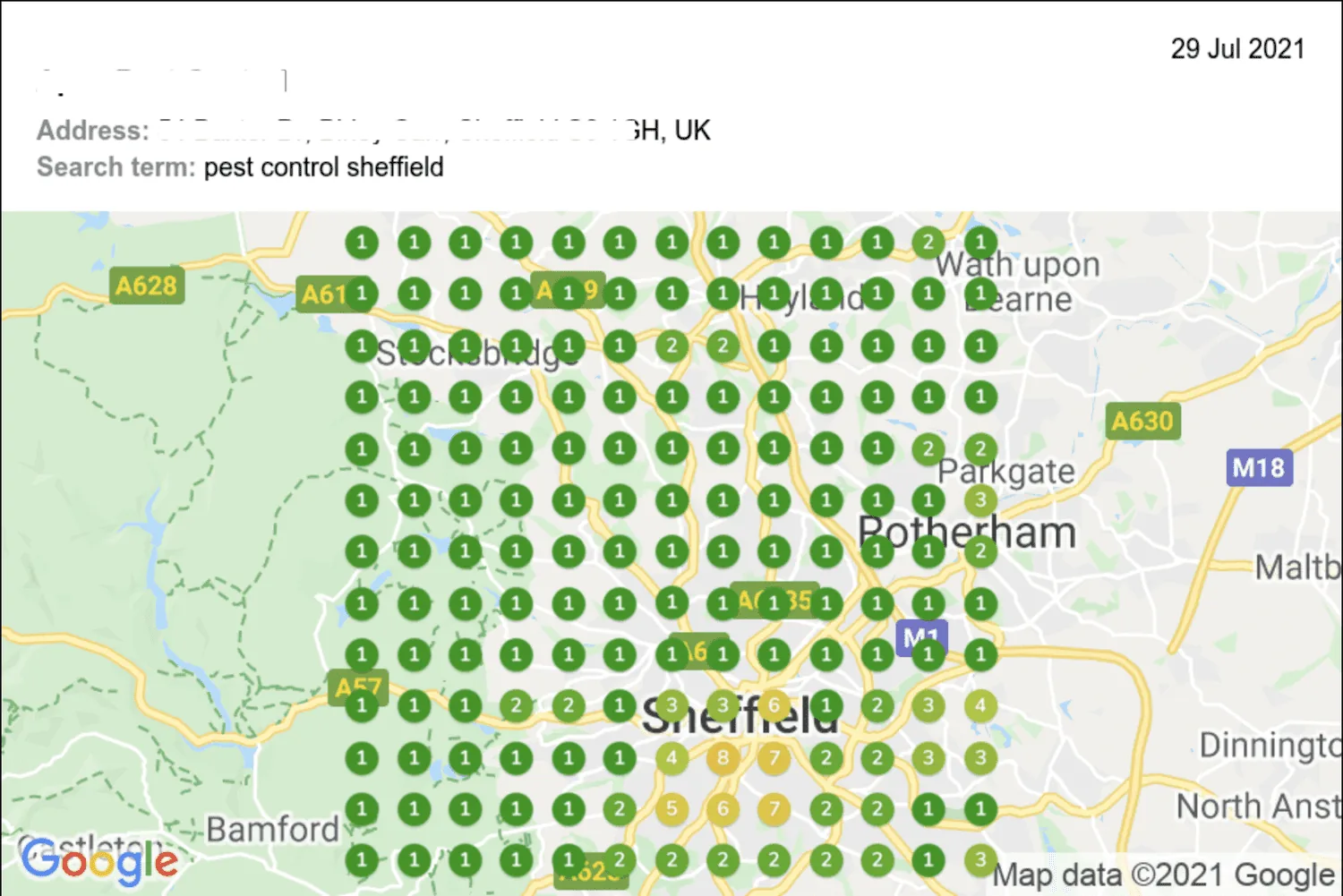
For a local business, the website, Google Business Profile, directories and other trusted references should describe the same organisation. Accurate names, services, locations and contact details support customer confidence. Mobile usability also matters because local research and contact journeys often happen on smaller screens.
Transparent reporting
See the work, the evidence and the next priority
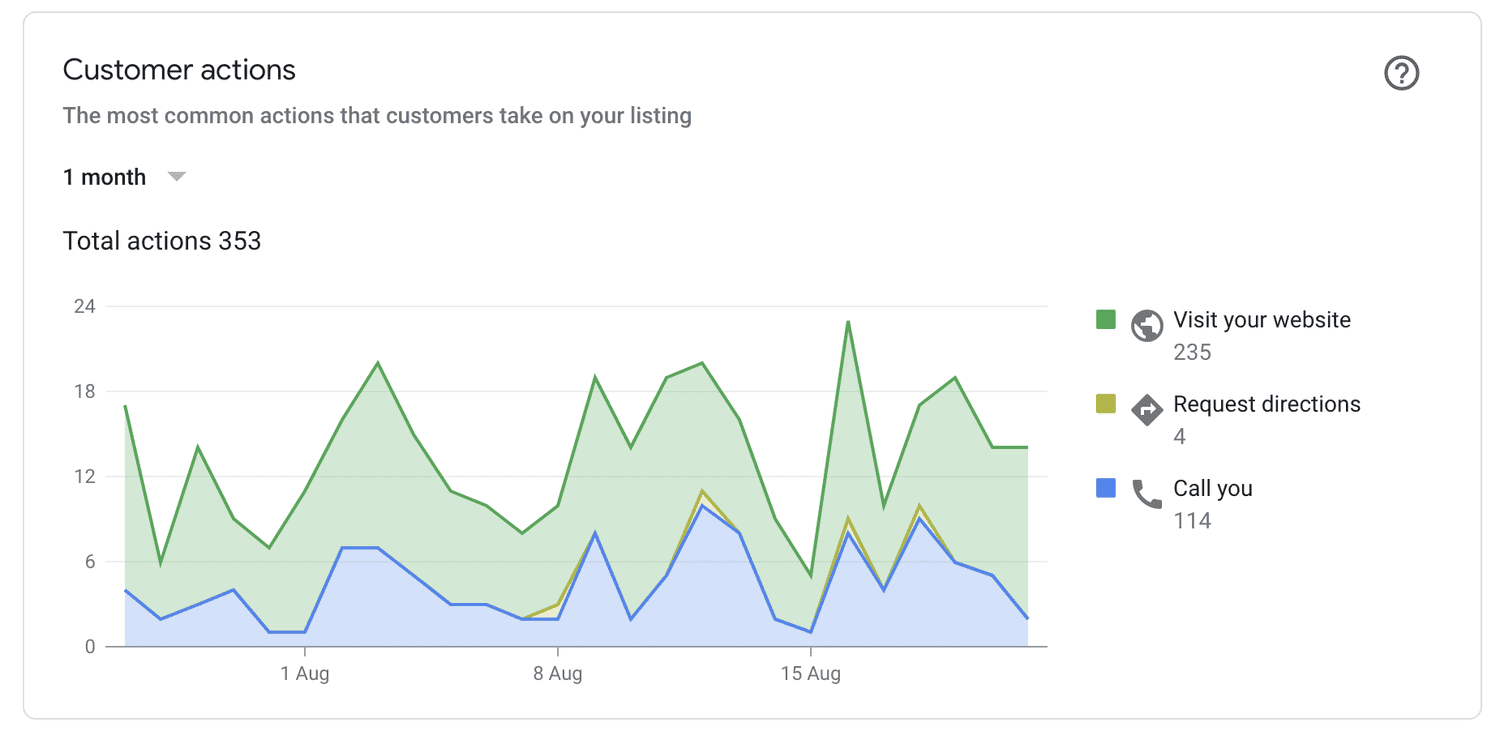
A monthly report should not hide behind a ranking chart. Where ongoing SEO consulting is agreed, reporting can cover completed actions, technical health, indexation, visibility for relevant subjects, local performance, important-page visits and qualified actions. Analytics and Search Console data are interpreted in context, with gaps and limitations stated clearly.
Examples from project reporting
These historical images are retained from the original Red Kite SEO website as examples of prior reporting. They describe past project observations and do not guarantee the same rankings, calls or visibility for another business.
Review the case studies, dates and evidence notes →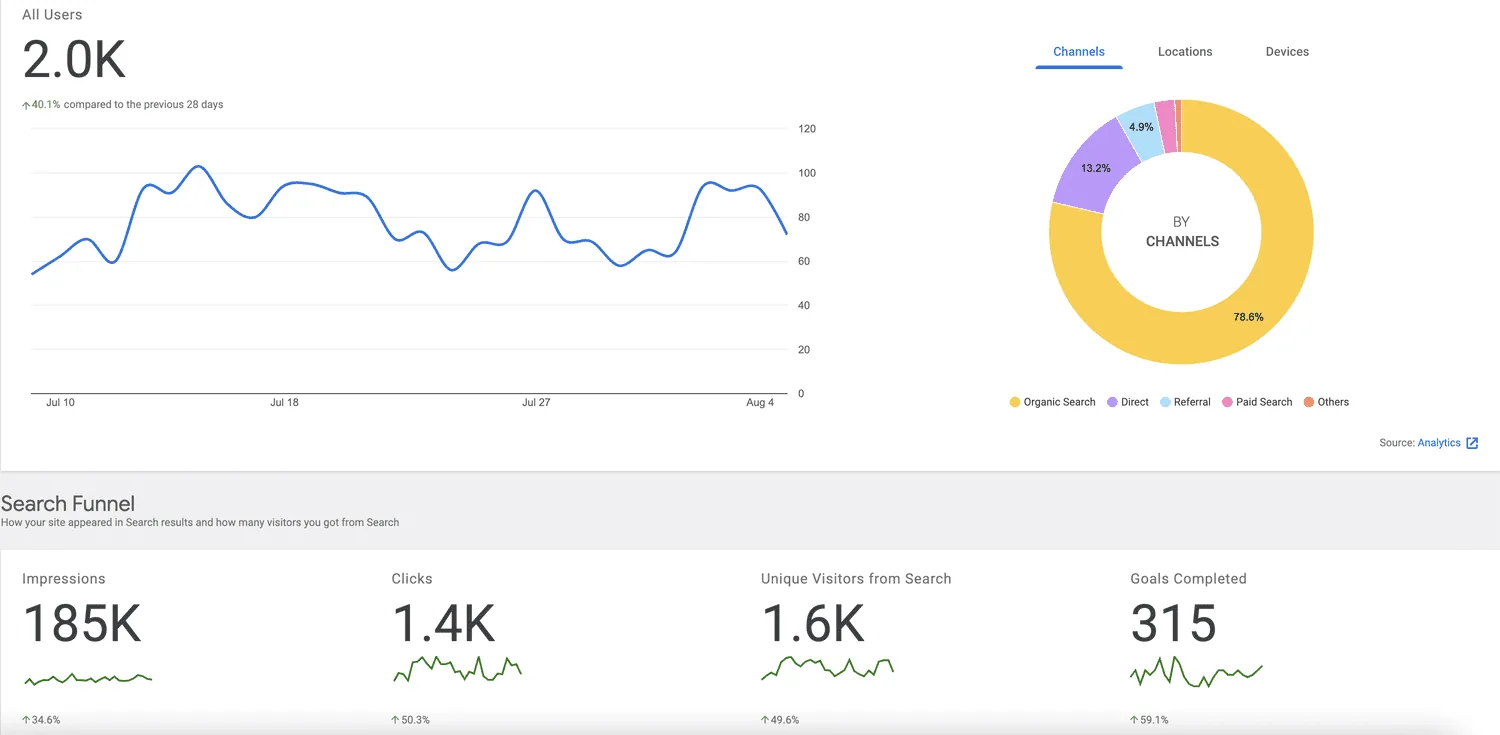
Choosing an SEO service
A useful conversation should explain the work, evidence and limitations in plain language.
What does small-business SEO include?
The scope can include technical access, website structure, service pages, content, local search, business entities, internal links and measurement. The priorities depend on the website and business requirement.
Can SEO guarantee first-page rankings?
No. Search results are controlled by search engines and change over time. Red Kite SEO does not guarantee rankings, traffic, leads, sales or revenue.
How should SEO progress be assessed?
Agree the objective, starting evidence, relevant pages and useful measures before work begins. Reports should help explain what changed, what was completed and what decision follows.
Does SEO now include AI search?
SEO should account for how information is structured, sourced and understood across modern discovery systems. No provider can guarantee that a business will be mentioned or recommended by an AI service.
How do I know an SEO agency or consultant is not a scam?
Be cautious of guaranteed rankings, pressure to hand over credentials before scope is agreed, hidden ownership and reports that cannot explain the work. Ask who performs the work, what access is needed, how decisions are evidenced and what the business retains.
How much do small-business SEO services cost?
Cost depends on the website, market, technical condition, location scope, content requirement and whether implementation or ongoing consulting is included. Red Kite SEO defines the work before providing a proposal.
How long does SEO take?
SEO is normally assessed over months rather than promised by a date. Timing varies with the starting point, competition, implementation pace and search-engine changes. Early technical improvements do not guarantee a particular ranking or commercial result.
Who carries out the SEO work?
Pete Hogg is the named Red Kite SEO consultant. The proposal states the work Pete will complete, what the client or developer must supply and whether any specialist third-party input is required.

Experience and accountability
Guidance from Pete Hogg
Pete Hogg is the author of the Red Kite SEO guides and an SEO consultant based in Sheffield. He explains the work in plain language, keeps the scope visible and links each service to its supporting guidance.
Read Pete Hogg’s author profile →A practical starting point